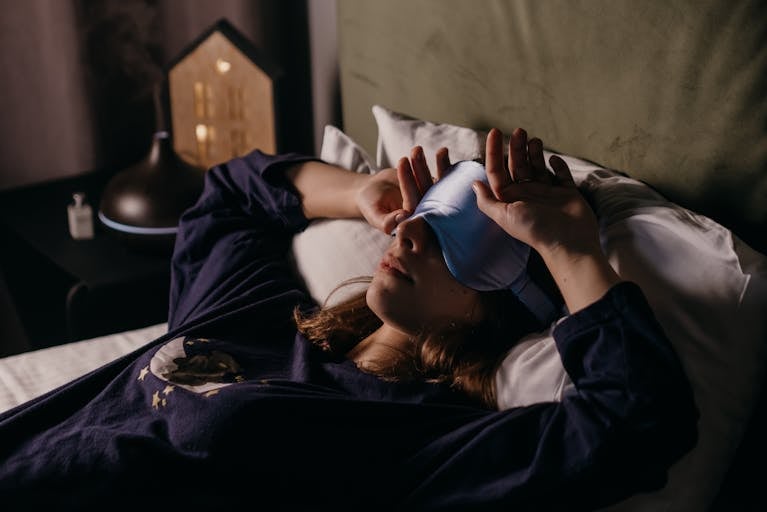

Perimenopause Sleep Problems: Why Night Sweats and 3 AM Wakeups Happen — and What Actually Helps
If your sleep suddenly makes no sense, it’s not you — and it’s not something you can fix by trying harder.
Perimenopause has a way of turning sleep into something unrecognizable.
You might fall asleep easily, then wake up at 3 am wide awake. Or wake up overheated, restless, or anxious for no clear reason. And the more you try to “fix” it — earlier bedtime, better routines, fewer screens — the less predictable it feels.
This isn’t random. And it’s not a failure of discipline.
Perimenopause changes how your body regulates temperature, stress, and sleep timing — which means the usual advice often stops working. If you want a clearer way to approach this without overcorrecting, you can start with the Peri Sleep Reset.
What causes sleep problems during perimenopause?
Perimenopause sleep problems are usually caused by changes in temperature regulation, cortisol patterns, melatonin production, and nervous system sensitivity. These shifts make sleep lighter, more reactive, and less predictable than before.
- Temperature regulation becomes more sensitive, leading to night sweats or waking up overheated
- Cortisol patterns shift, which can trigger early morning wakeups or a “wired” feeling at night
- Melatonin production changes, affecting how easily you fall and stay asleep
- The nervous system becomes more reactive, making it harder to settle once you wake up
Because these systems are connected, sleep can start to feel unpredictable — even if your routine hasn’t changed.
These perimenopause sleep problems are common and often misunderstood, especially when symptoms like night sweats and early waking appear without warning.
Why do I keep waking up at 3 am during perimenopause?
Waking up at 3 am during perimenopause is often linked to early cortisol spikes, blood sugar dips, or increased sleep sensitivity. Once awake, the brain can become alert quickly, making it harder to fall back asleep.
This often happens when:
- Cortisol rises earlier than it should
- Blood sugar dips overnight
- Your body shifts out of deep sleep more easily
Once you’re awake, your mind may turn on quickly — even if you felt tired before bed.
This isn’t a sign that something is “wrong.”
It’s a sign that your sleep system is more sensitive than it used to be.
Why night sweats and overheating disrupt sleep
Night sweats are not just uncomfortable — they actively interrupt your sleep cycle.
When your body overheats:
- You shift out of deeper sleep stages
- Your heart rate may increase
- You become more alert, even if you don’t fully wake
Even mild overheating can lead to:
- More frequent wakeups
- Lighter, less restorative sleep
- Difficulty falling back asleep
This is why “just cooling the room” doesn’t always solve the problem — it’s part of the picture, not the whole solution.
Why common sleep advice often stops working
Most sleep advice is built for stable, predictable sleep systems.
Things like:
- Strict routines
- Perfect sleep hygiene
- Doing “all the right things”
can actually backfire during perimenopause.
Why?
Because when you:
- Try multiple fixes at once
- Monitor sleep too closely
- Add pressure to “get it right”
you increase cognitive and nervous system activation — which makes sleep more fragile, not less.
This is where many women get stuck:
trying harder, while sleep becomes less responsive.
What actually helps perimenopause sleep problems
What helps most is identifying the primary disruption and making one targeted change at a time. Reducing overcorrection and nervous system pressure allows sleep to stabilize more effectively than trying multiple fixes at once.
The most effective approach is:
- Identify the primary disruption (heat, early waking, or mental activation)
- Make one targeted adjustment at a time
- Give your body a few nights to respond before changing anything else
Examples:
- Adjusting temperature or bedding only if overheating is the main issue
- Supporting circadian rhythm if early waking is dominant
- Reducing cognitive activation if your mind turns on at night with simple tools like 4-7-8 breathing
This approach works because it reduces:
- Overcorrection
- Conflicting signals
- Nervous system pressure
And gives your body space to stabilize.
It’s the same step-by-step structure used inside the Peri Sleep Reset, designed to help you test one change at a time without guesswork.

👉 Check out 4-7-8 breathing How to Use 4-7-8 Breathing for Sleep and Stress Relief
A calmer way to approach sleep during perimenopause
Perimenopause doesn’t require perfect sleep habits.
It requires a different relationship with sleep.
That means:
- Less urgency
- Fewer simultaneous changes
- More consistency, even when results are uneven
Progress often looks like:
- Falling back asleep faster
- Less panic when you wake up
- Slightly more stable nights over time
Not perfection — but steadiness.
This same principle — working with your body instead of overriding it — is part of the broader Venvy Method, especially the Restore pillar, which focuses on sleep, recovery, and nervous system support.
If you want structure without overwhelm
If your sleep feels unpredictable and you’re not sure what to try first, structure can help — as long as it doesn’t add pressure.
That’s exactly what I designed the Peri Sleep Reset for.
It’s a short, 7-night framework that helps you:
- Identify what’s disrupting your sleep most
- Try one change at a time, in the right order
- Avoid stacking fixes or overcorrecting
You don’t need to do everything.
You just need a place to start.
🌙 Check out the Peri Sleep Reset for deeper, more consistent sleep.

The Venvy Method
A four-pillar system for sustainable health, strength, and balance—without extremes or burnout.




When to seek additional support
While many sleep changes during perimenopause are manageable, there are times when it’s important to look beyond lifestyle adjustments.
Consider speaking with a clinician if:
- Night sweats are severe or worsening
- Sleep disruption is significantly affecting daily functioning
- Anxiety or mood changes are intensifying
- You’ve tried consistent changes without improvement
This isn’t a failure — it’s part of understanding what your body needs.
If sleep is your main focus right now, you can also explore the Restore pillar, where we break down sleep, recovery, and nervous system support in more detail.