
How to Use 4-7-8 Breathing for Sleep and Stress Relief
Calm your nervous system in under 2 minutes
If your mind races at night, your body feels wired but tired, or you struggle to fully unwind, your breath is one of the fastest ways to shift your state.
4-7-8 breathing is a simple technique you can use anywhere to reduce stress, settle your body, and make it easier to fall asleep—without apps, equipment, or overthinking it.
This post may contain affiliate links. That means I may earn a small commission if you purchase through them, at no extra cost to you. I only share products I genuinely use or recommend.
What Is 4-7-8 Breathing?
4-7-8 breathing is a controlled breathing technique that uses a specific rhythm to calm the nervous system and promote relaxation.
The pattern is simple:
- inhale through your nose for 4 seconds
- hold your breath for 7 seconds
- exhale slowly through your mouth for 8 seconds
That’s it.
No tools. No setup. Just your breath.
This is part of the Restore pillar, which focuses on calming your nervous system and supporting better sleep.
Why 4-7-8 Breathing Works for Sleep and Stress
4-7-8 breathing activates the parasympathetic nervous system, helping your body shift out of stress mode and into relaxation.
Your breath is directly connected to your nervous system.
When you slow it down intentionally, you:
- reduce stress signals
- lower heart rate
- help your body transition into rest
This is especially helpful when:
- your mind won’t shut off at night
- your body feels overstimulated
- stress or hormones are affecting your sleep
These are especially common during perimenopause, where sleep can become more sensitive and unpredictable.
When to Use 4-7-8 Breathing
You can use 4-7-8 breathing anytime you need to calm your body, especially before sleep or during moments of stress.
It works well:
- during your evening wind-down
- right before bed
- after a stressful moment
- after screen time or overstimulation
- after gentle movement or stretching
Think of it as a reset—not a routine you have to perfect.
How to Practice 4-7-8 Breathing (Step-by-Step)
Repeat the 4-7-8 breathing cycle for 3–5 rounds to begin calming your body.
- Sit or lie down comfortably
- Inhale through your nose for 4 seconds
- Hold your breath for 7 seconds
- Exhale slowly through your mouth for 8 seconds
- Repeat for 3–5 cycles
Keep your breath soft and steady—not forced.
Why It’s Especially Helpful for Women 35+
Hormonal shifts can increase stress sensitivity and disrupt sleep, making nervous system support more important.
As hormones shift, your body may:
- become more sensitive to stress
- have a harder time winding down
- experience more disrupted sleep
Simple tools like this help your body:
- settle faster
- recover more effectively
- and feel more stable overall
Especially during your luteal phase or high-stress periods.
Optional Tools to Enhance Your Breathing Practice
Simple, calming tools can make your breathing practice feel more supportive and easier to stick with.
You don’t need anything—but if you want to layer it in:
- lavender essential oil
- tart cherry tea or a warm evening drink
- weighted eye mask
- magnesium spray
These aren’t required.
They just make the experience feel more grounded.
Follow Along: Guided 4-7-8 Breathing
Prefer a visual guide?
👉 4-7-8 Breathing Exercise by GoZen (A simple external video you can follow anytime.)
How This Fits Into The Evening Reset
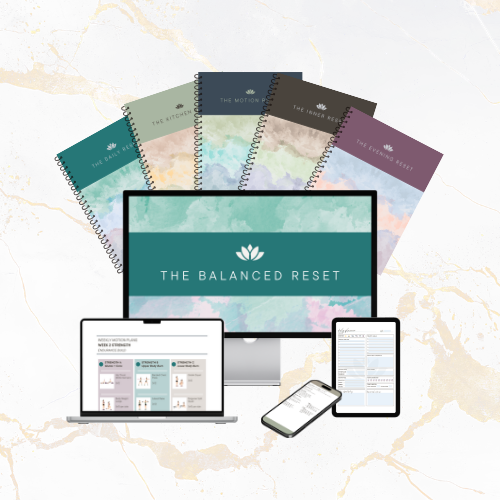
4-7-8 breathing is a simple tool used within The Evening Reset to support sleep and recovery.
This isn’t meant to be a one-off technique.
It works best when it’s part of a consistent wind-down routine.
That’s exactly how the Evening Reset is designed—helping your body transition out of stimulation and into rest.
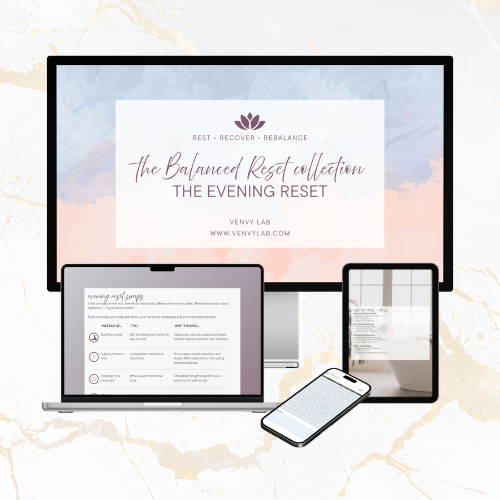
🌙 Explore The Evening Reset, part of Venvy Lab’s Balanced Reset system
Build a Routine That Actually Helps You Wind Down
If your evenings feel rushed, overstimulated, or inconsistent:
👉 The Balanced Reset by Venvy Lab includes structured tools like the Evening Reset to help you build routines that support sleep, recovery, and nervous system regulation.