Why Strength Training Matters More After 40
There’s a moment somewhere after 40 when a lot of women realize the old wellness rules stopped working.
The long cardio sessions don’t hit the same.
The “eat less, move more” advice suddenly feels like punishment.
Recovery takes longer. Energy feels less stable. Muscle seems harder to maintain. And somehow, carrying groceries up one flight of stairs starts feeling suspiciously personal.
This is exactly why strength training matters more in midlife, not less.
Not because you need to shrink yourself.
Because your body is asking for support.
Your Body Is Changing — Even If Your Habits Haven’t
One of the most frustrating parts of midlife is realizing you can be doing “the same things” and getting completely different results.
Hormonal shifts during perimenopause and beyond can affect:
- Muscle mass
- Bone density
- Recovery
- Sleep quality
- Energy regulation
- Blood sugar stability
- Fat distribution
- Stress resilience
A lot of women interpret this as:
“I need to work harder.”
Usually, the smarter answer is:
“You need a different strategy.”
Strength training is one of the few wellness tools that supports almost every major midlife change at the same time.
Muscle Becomes More Important With Age
After around age 30, women naturally begin losing muscle mass over time if they are not actively maintaining it.
That matters for far more than appearance.
Muscle helps support:
- Metabolism
- Stability and balance
- Joint protection
- Bone health
- Blood sugar regulation
- Daily energy
- Long-term mobility
In practical terms, strength training helps you stay capable.
Not just “fit.”
Capable.
Capable of hiking, lifting luggage, carrying kids or groceries, traveling comfortably, getting up off the floor easily, protecting your bones, and maintaining independence as you age.
That’s a very different goal than chasing thinness.
Bone Density Matters More Than Most Women Realize
Midlife women are at significantly higher risk for bone loss as estrogen levels change.
And unfortunately, walking alone usually is not enough to meaningfully maintain bone density.
Your bones respond to resistance and load.
That means:
- Strength training
- Resistance bands
- Weighted carries
- Bodyweight training
- Progressive overload
You do not need to become a powerlifter.
But your body does benefit from resistance.
Especially now.
Strength Training Helps Support Hormonal Stability
This is one of the most underrated parts.
Strength training can help support:
- Blood sugar regulation
- Stress resilience
- Sleep quality
- Mood
- Energy stability
And unlike excessive cardio, properly programmed strength training is often less draining to the nervous system for women already running on low recovery.
That matters.
Because a lot of midlife women are not undertrained.
They are overstressed, under-recovered, under-muscled, and exhausted.
At Venvy Lab this is part of the Venvy Method:
- Move in ways that build strength and resilience.
- Restore enough to actually recover.
- Nourish your body with adequate protein and support.
- Sync your routines to the realities of midlife physiology — not outdated wellness rules.
You Do Not Need To Train Like You’re 22
This is where many women get stuck.
They think strength training means:
- Hardcore gym culture
- Two-hour workouts
- Punishing boot camps
- Heavy lifting immediately
- Fitness influencer nonsense
It does not.
Strength training can look like:
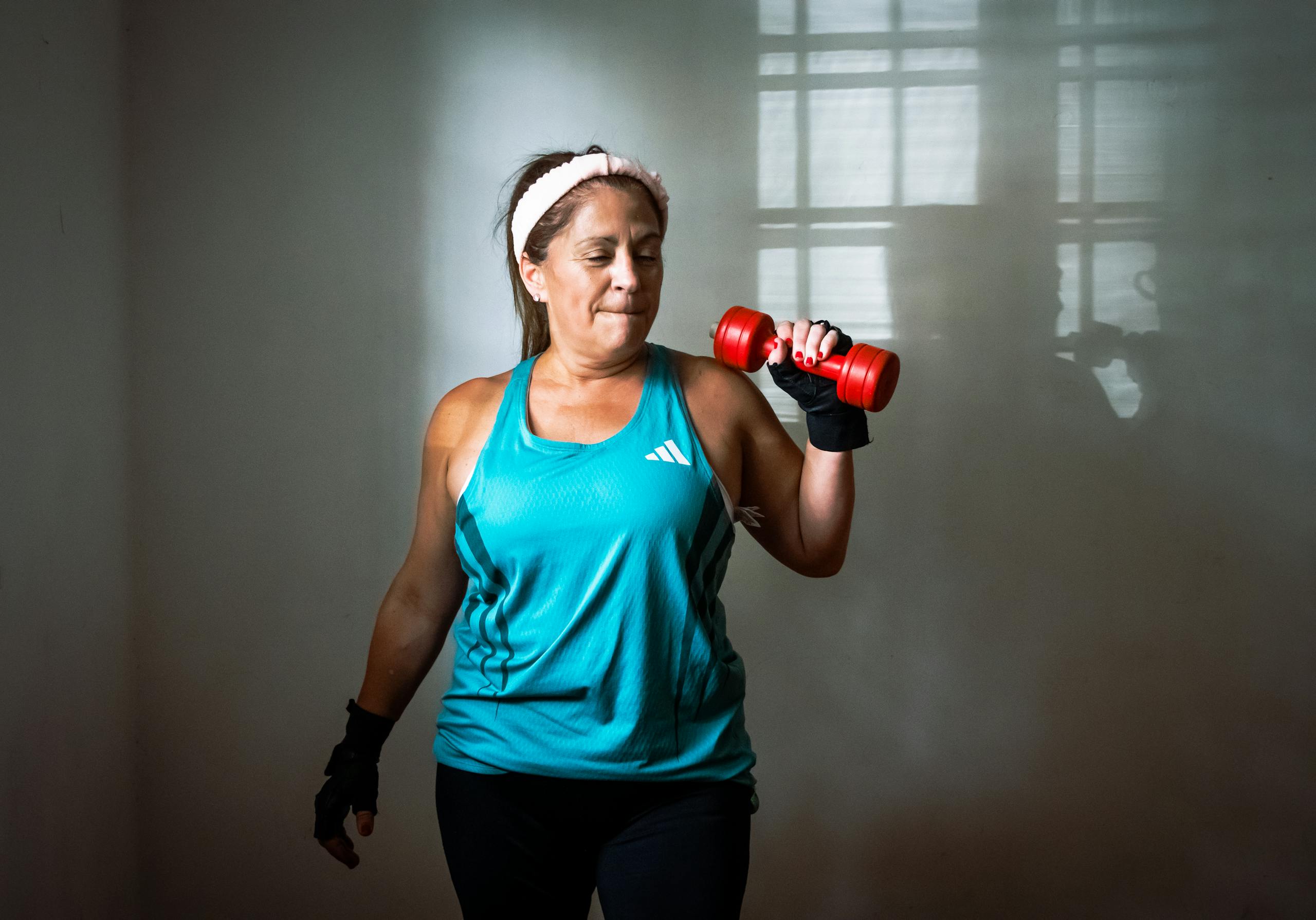
- Dumbbells at home
- Resistance bands
- Machine circuits
- Bodyweight movements
- Short, consistent sessions
- Progressive walking with load
- Functional movement training
The goal is not punishment.
The goal is adaptation.
Midlife Fitness Should Prioritize Recovery, Not Destruction
One of the biggest mindset shifts after 40 is realizing:
feeling destroyed after every workout is not proof the workout worked.
You do not need to annihilate yourself to make progress.
In fact, constantly overtraining while under-recovering can make midlife symptoms feel worse:
- Increased fatigue
- Elevated stress
- Poor sleep
- Increased inflammation
- Higher injury risk
- More inconsistent energy
Sustainable strength training usually works better than all-or-nothing intensity.
Especially long term.
Strength Changes More Than Your Body
This part matters too.
There is something deeply stabilizing about feeling physically capable again.
Not smaller.
Not younger.
Not “perfect.”
Strong.
Strong enough to trust your body again.
Strong enough to move through the world differently.
Strong enough to stop treating wellness like punishment.
That shift tends to spill into everything else.
Simple Ways To Start
If you are completely new to strength training, start smaller than you think you need to.
A good starting point:
- 2–3 sessions per week
- 20–40 minutes
- Focus on consistency first
- Prioritize compound movements
- Walk regularly
- Recover properly
- Increase gradually
You do not need an extreme plan.
You need a repeatable one.
Build Strength Without Burning Yourself Out
One of the biggest mistakes women make in midlife fitness is believing they need to overhaul their entire life overnight.
Usually, the women who feel best are not the ones doing the most.
They are the ones building sustainable systems they can actually maintain.
That’s part of the reason I created The Balanced Reset — a practical, hormone-aware wellness system designed to help women build supportive routines around movement, recovery, nourishment, sleep, and consistency without falling into the all-or-nothing cycle.
Because midlife wellness works better when your habits support your hormones instead of fighting them.
Final Thoughts
After 40, wellness stops being about chasing smaller.
It becomes about building a body that supports the life you actually want to live.
More energy.
More resilience.
More capability.
More stability.
More years of feeling like yourself.
That is what strength training is really about.
And honestly? Midlife might be the most important time to start.