

Why Wellness Routines Stop Working in Midlife (And What to Do Instead)
At some point, things that used to work… stop working.
Your routines.
Your habits.
Your go-to resets.
You try to get back into it:
- eat better
- move more
- stick to a routine
And for a few days, it feels like it might work again. Then something shifts.
You fall off.
You lose momentum.
You start over.
Again.
If that cycle feels familiar, you’re not alone. And you’re not doing anything wrong.
Why do wellness routines stop working in midlife?
Wellness routines often stop working in midlife because your hormones, energy levels, and recovery patterns become less predictable.
What used to be consistent… isn’t anymore.
Your body starts to:
- respond differently to stress
- recover more slowly
- fluctuate in energy day to day
So the same routine that used to feel easy now feels:
- harder to stick to
- less effective
- more frustrating
Why consistency suddenly feels harder
Consistency becomes harder when your energy and capacity vary from day to day, making rigid routines difficult to maintain.
Most routines are built around one assumption:
👉 You’ll feel roughly the same every day.
But in midlife, that’s not reality.
Some days you feel:
- motivated
- energized
- ready to go
Other days?
Not even close.
So when your routine doesn’t flex, it breaks.
Why “doing more” makes it worse
Trying to do more often backfires because it increases stress and creates routines that are too demanding to sustain.
This is the trap.
When things stop working, you think:
“I just need to try harder.”
So you:
- tighten your schedule
- add more rules
- increase your effort
And it works… briefly.
Until it doesn’t.
Because the problem isn’t effort. It’s fit.
Why your body responds differently now
Your body responds differently in midlife due to hormonal changes that affect energy, metabolism, recovery, and stress response.
This is the part most plans ignore.
Your body is:
- more sensitive to stress
- more reactive to changes
- less tolerant of extremes
So things that used to feel effective can now feel:
- draining
- inconsistent
- unsustainable
Why most routines are built to fail
Most routines are built for ideal conditions, not real life—making them difficult to maintain long term.
They assume:
- perfect schedules
- stable energy
- no interruptions
Which… isn’t how life works. So when something disrupts your routine, it collapses.
And you’re back at the beginning.
What actually works instead
What works is a flexible, supportive approach that adapts to your energy and allows you to stay consistent without starting over.
Instead of:
- rigid rules
- all-or-nothing thinking
- perfect execution
You need:
- simple structure
- built-in flexibility
- routines you can return to
That’s what creates real consistency.
This is exactly what the Venvy Method is built for—helping you support how you nourish, move, restore, and sync your routines so they actually work with your life.
How to build routines that actually stick
Routines that stick are simple, adaptable, and designed to work even on low-energy days.
The goal isn’t perfection.
It’s:
👉 consistency you can maintain
That means:
- lowering the barrier to entry
- removing unnecessary complexity
- focusing on what actually moves the needle
So you don’t have to start over every time something shifts.
Where The Balanced Reset fits in
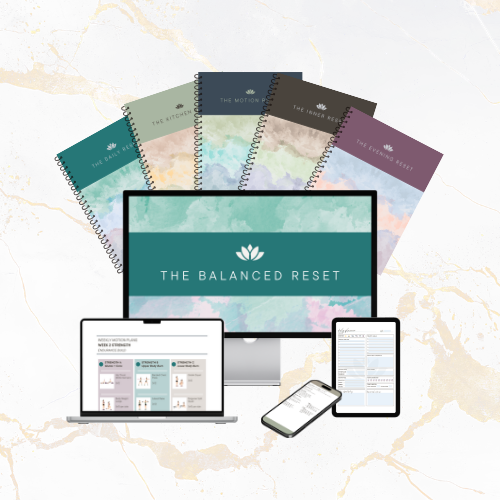
The Balanced Reset provides a structured system that helps you rebuild routines in a way that’s sustainable and adaptable.
This is where things start to click.
Because instead of:
- figuring it out as you go
- constantly adjusting
- constantly restarting
You have:
- a clear structure
- simple guidance
- flexibility built in
The bottom line
If your routines keep falling apart, it’s not a lack of discipline—it’s a sign they weren’t built for how your life works now.
You don’t need to push harder. You need something that fits better.
And once you have that? You stop starting over—and start building something that lasts.